

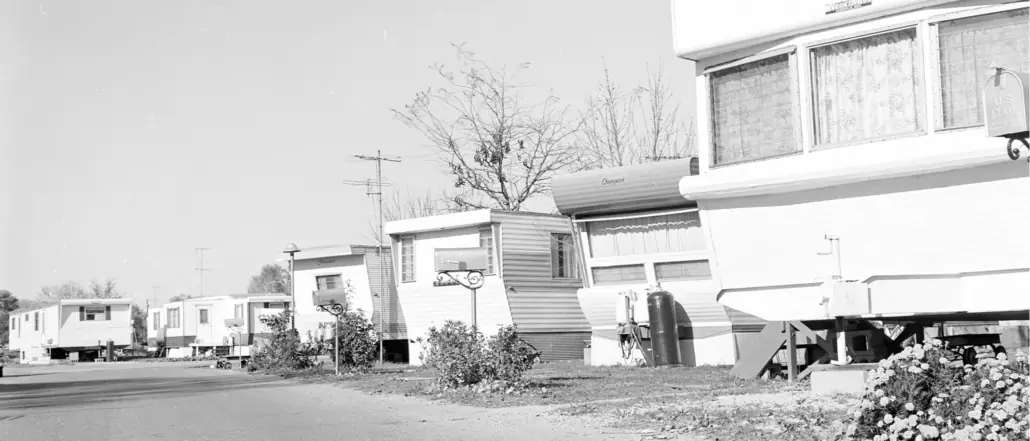
Manufactured housing evolved from early 20th-century camping trailers into permanent, factory-built homes. Following WWII, they addressed housing shortages, transforming from small “trailers” into larger “mobile homes” (1950s) and finally to HUD-code regulated “manufactured homes” (1976), focusing on quality, affordability, and permanence over mobility.
Key Historical Developments
- Early Beginnings (1900s–1920s): Originated as small camping trailers towed behind cars, known as “trailer coaches” or “autocamping” units, which blossomed in the 1920s.
- Wartime/Post-War Expansion (1940s): Demand spiked for portable housing for factory workers and veterans, leading to larger, 30+ foot units with small bathrooms.
- The Mobile Home Era (1950s–1960s): In 1956, “ten-wide” (10-foot wide) units were introduced, shifting them from temporary travel units to more permanent dwellings.
- The HUD Code (1976): Congress passed the National Mobile Home and Construction and Safety Standards Act, creating a national building code (HUD Code). This significantly improved quality and safety standards.
- Transition to Manufactured Housing (1980): The 1980 Housing Act mandated that “manufactured home” replace “mobile home” in federal terminology, reflecting their nature as permanent factory-built homes rather than vehicles.
Usage Examples & Evolution
- Vacation Trailers (1920s-30s): Primarily used for recreational travel (“autocamping”).
- Transitional Housing (1940s): Provided homes for veterans and workers.
- Permanent Residence (1950s-Present): Evolved into long-term, affordable, and often customized, permanent family homes, often placed on private land rather than mobile home parks.
Synonyms and Terms
- Trailer/Trailer Coach: Early 20th-century models used for travel.
- Mobile Home: Common term from the 1950s-1970s, now generally referring to units built before the 1976 HUD code.
- Factory-Built Housing: Broader term for homes built in factories.
- Manufactured Home: Used for homes built to the federal HUD code after 1976.
Key Distinctions in History
- Size: Early trailers were ≤ 8 ft wide; 1950s introduced 10 ft; 1960s/70s increased to 12-14 ft widths and greater lengths.
- Mobility: Early units were moved often; modern manufactured homes are rarely moved once installed.
Relevant images of manufactured housing through the decades can be found in the RV/MH Hall of Fame collections.